
Why Professional Development Infrastructure Matters More Than Training Delivery
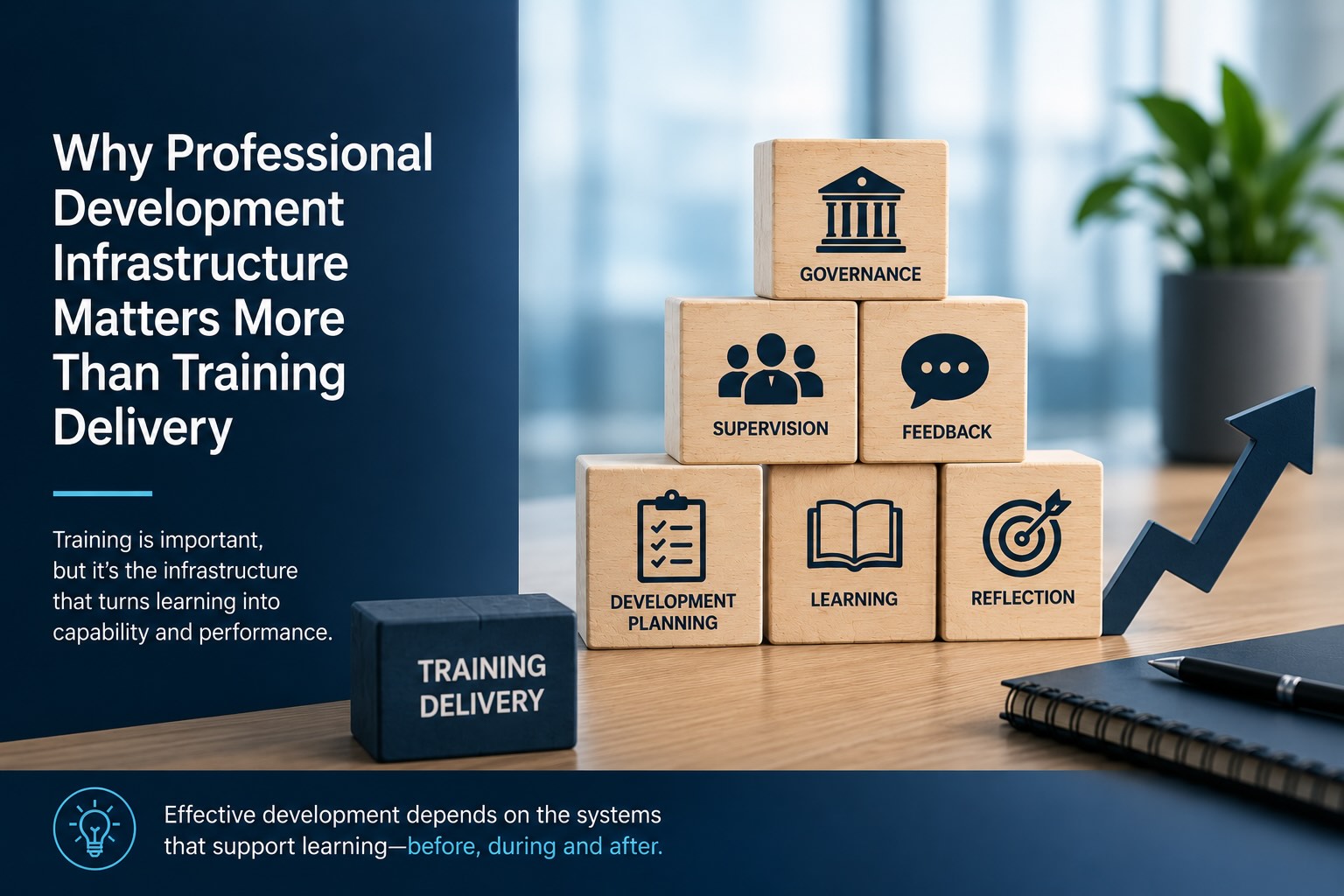
Many firms invest significant time and resources in professional development, yet capability improvements often remain inconsistent. While training delivery is important, sustainable professional development depends on a broader infrastructure of supervision, feedback, governance and support. Understanding this infrastructure may be the key to improving learning outcomes and professional performance.
Training Is Not the Same as Development
Professional development discussions frequently focus on training provision. Organisations review course catalogues, introduce new workshops, purchase online learning platforms and increase training hours in the expectation that capability will improve.
Yet many firms continue to encounter familiar challenges:
- Learning is not consistently applied in practice.
- Development plans are completed but rarely revisited.
- Skills improvements vary significantly between teams.
- Competence records exist without clear evidence of performance improvement.
- Training activity is high while capability outcomes remain difficult to demonstrate.
These issues often lead organisations to conclude that additional training is required. In reality, the challenge may lie elsewhere.
Training is only one component of professional development. The systems surrounding learning often determine whether knowledge and skills translate into meaningful workplace capability.
The Missing Link Between Learning and Performance
Professional development does not occur during a training event alone.
Individuals develop capability through a combination of learning, experience, supervision, reflection, feedback and practical application. Training can support this process, but it cannot replace it.
This is where professional development infrastructure becomes important.
Professional development infrastructure refers to the structures, processes and support mechanisms that enable learning to become performance.
Examples include:
- Development planning processes
- Supervision arrangements
- Performance conversations
- Reflective practice activities
- Competence frameworks
- Feedback mechanisms
- Learning governance systems
- Development record keeping
When these elements work together, learning is reinforced and capability growth becomes more consistent. When they are absent or disconnected, even high-quality training may have limited long-term impact.
Why Training Investments Sometimes Underperform
Many development programmes are evaluated primarily on participation metrics:
- Attendance levels
- Course completion rates
- Satisfaction scores
- Learning hours delivered
While these measures are useful, they do not necessarily indicate whether capability has improved.
A common pattern emerges across professional firms. Significant investment is directed towards learning delivery, while relatively little attention is given to the systems that support ongoing development.
For example, a solicitor may attend advocacy training but receive limited opportunities for structured practice. Another individual may complete management training but receive little feedback on their leadership behaviours afterwards.
In both situations, learning has occurred. Capability development remains uncertain.
Without supporting infrastructure, development becomes dependent on individual motivation and local management practices rather than organisational design.
Professional Development Requires Structure
Capability growth rarely occurs by accident.
The most effective development environments create structured opportunities for individuals to learn, apply, receive feedback and improve over time.
This structure often includes:
Clear Expectations
Individuals need clarity regarding the capabilities they are expected to demonstrate.
Development Planning
Learning activity should support identified development needs rather than exist as isolated events.
Supervision and Support
Managers and supervisors play a critical role in helping individuals apply learning in practice.
Reflection and Feedback
Capability improves when people regularly review performance and receive meaningful feedback.
Evidence and Review
Development should be visible, measurable and capable of demonstrating progress over time.
Together, these elements create an environment where learning is continuously reinforced rather than treated as a standalone activity.
Moving Beyond a Training-Centred Approach
Many firms already possess elements of professional development infrastructure. The challenge is often that these components have evolved independently rather than as part of a coherent system.
A training programme may sit separately from appraisal processes. Competence requirements may be disconnected from development planning. Supervisors may receive little guidance on their role in supporting learning.
A more systematic approach considers how these elements interact.
Instead of asking:
“What training should we provide?”
firms may achieve better outcomes by also asking:
“What systems help people turn learning into capability?”
This shift in thinking can significantly improve the effectiveness of existing development investments.
Key Takeaways
- Training is only one element of professional development.
- Learning transfer depends heavily on supporting systems and processes.
- Many capability challenges are infrastructure issues rather than training issues.
- Supervision, feedback and governance play critical roles in development outcomes.
- Sustainable capability growth requires structure, not isolated learning events.
- Organisations benefit when development infrastructure is intentionally designed.
Conclusion
Professional development is often discussed in terms of courses, programmes and learning activities. However, capability is usually shaped by a wider system of support, supervision, reflection and governance.
Firms seeking stronger development outcomes may benefit from looking beyond training delivery alone. By strengthening the infrastructure that surrounds learning, organisations can create more consistent, measurable and sustainable capability development.
The question may not be whether training is effective. It may be whether the systems supporting learning are sufficiently developed to allow capability to grow.
Further Consideration
If your organisation is reviewing its professional development arrangements, it may be useful to consider whether current investment is focused primarily on training delivery or on the wider infrastructure that enables learning to become capability in practice.
CONTINUE READING
Read Other Articles in This Series
Previous Article

Why Spreadsheets Fail Competence Governance
Next Article
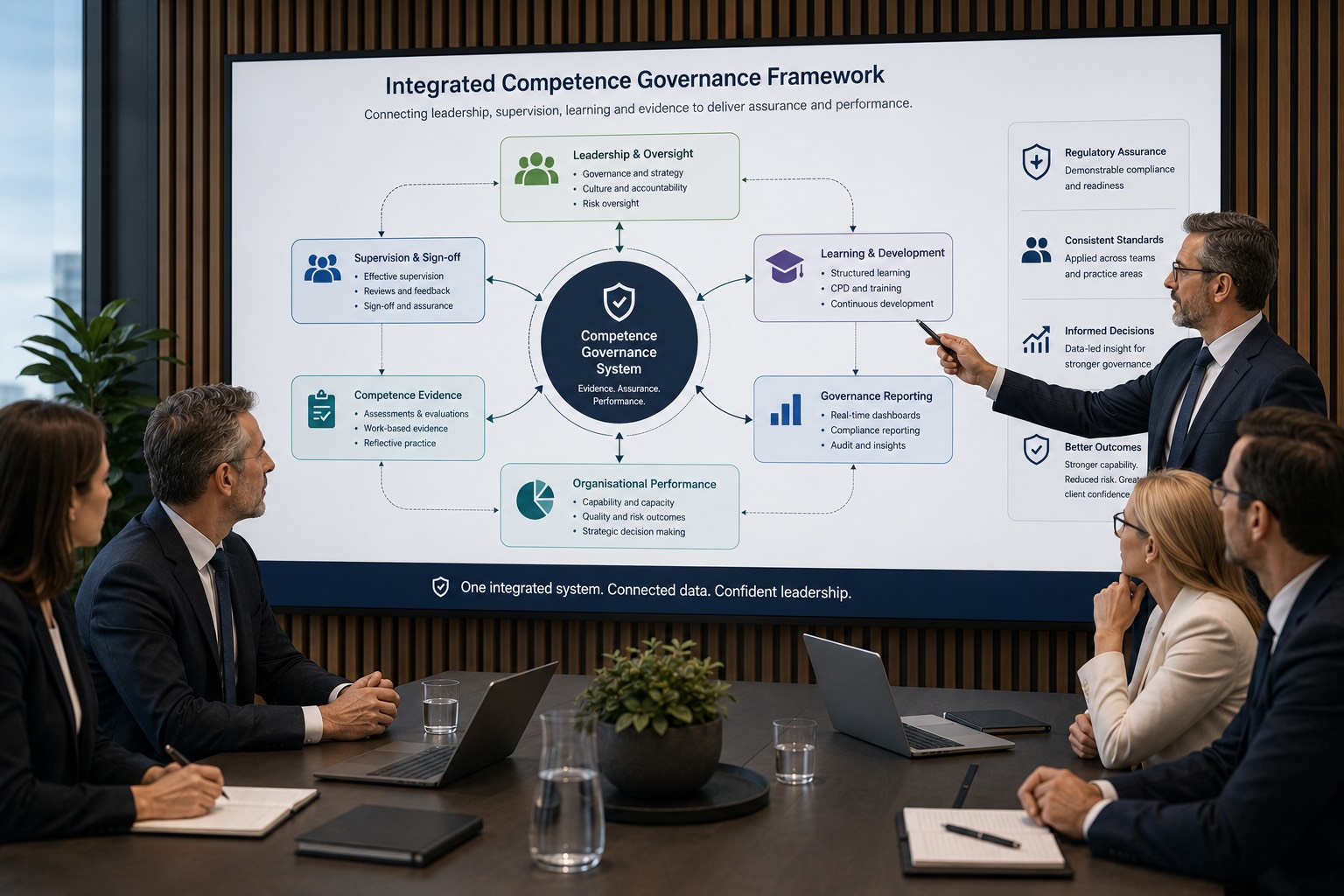
Designing a Competence Governance System
Explore Related Topics

Why Learning Design Matters More Than Course Content
Recommended Next Step
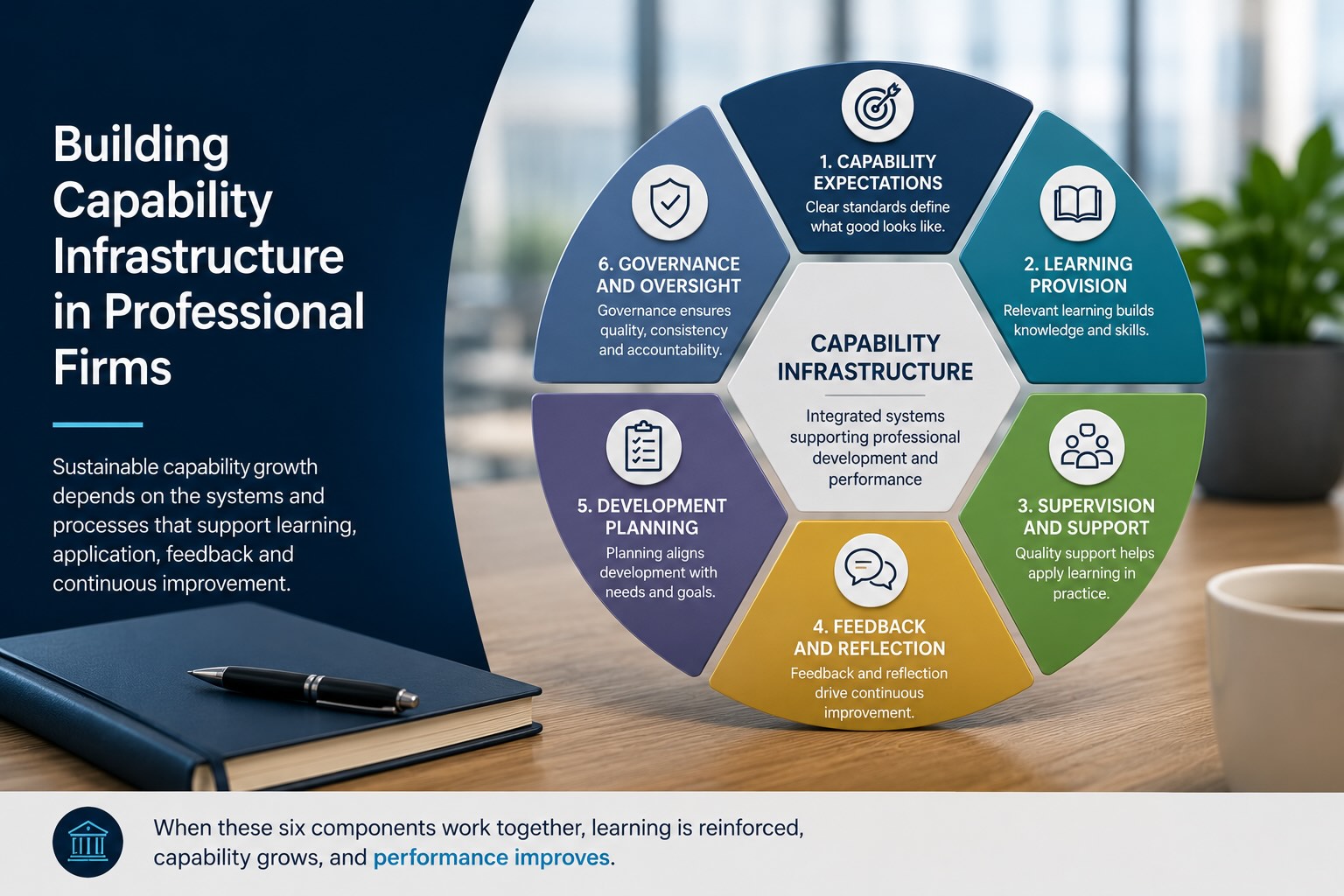
Building Capability Infrastructure in Professional Firms
