
Why Spreadsheets Fail Competence Governance
Spreadsheets can record information, but they cannot govern competence. Discover why modern law firms need integrated systems that connect learning, supervision, evidence and organisational insight into a coherent governance framework.
Introduction
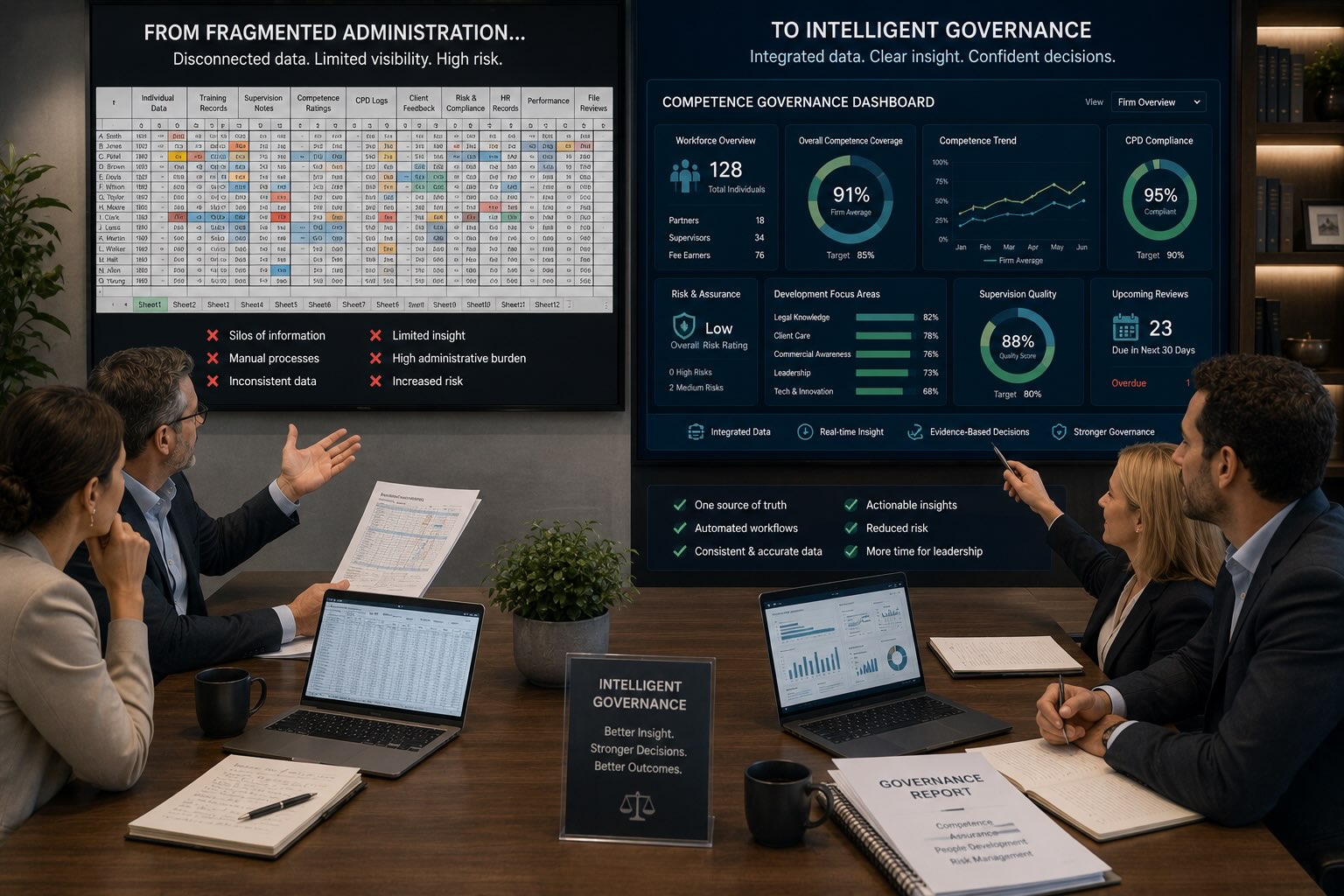
For many years, spreadsheets have been the default tool for managing professional development and competence information within law firms. They are used for learning records, training attendance, CPD logs, appraisal dates, annual declarations and for logging supervisor reviews.
Many organisations have built extensive spreadsheets that appear to provide an effective overview of professional development activity. For relatively simple administrative tasks, spreadsheets remain valuable. They are familiar, flexible and inexpensive.
However, competence governance is no longer simply an administrative exercise.
As regulatory expectations evolve and organisations seek greater assurance regarding professional capability, spreadsheets begin to reveal significant limitations. They record information. They rarely provide governance. The distinction is important. Competence governance requires organisations to understand relationships, identify trends, support leadership decisions and demonstrate organisational assurance.
These are challenges that spreadsheets were never designed to solve.
When Spreadsheets Work Well
It is important to recognise that spreadsheets are not inherently problematic. They remain useful for:
- maintaining simple lists;
- recording attendance;
- tracking deadlines;
- organising contact information;
- producing straightforward reports.
Many firms have successfully relied upon spreadsheets for years. The issue is not the spreadsheet itself. The issue arises when organisations expect spreadsheets to perform the role of an integrated competence governance system.
Competence Has Become More Complex
Modern competence management extends well beyond recording completed learning activities. Organisations increasingly need to understand:
- supervision effectiveness;
- professional development;
- reflective practice;
- competence evidence;
- quality assurance;
- capability trends;
- governance reporting;
- organisational risk.
These information sources are interconnected. Managing them separately within multiple spreadsheets creates increasing complexity over time.
The Hidden Risks of Spreadsheet-Based Governance
As organisations grow, spreadsheet-based systems often create challenges that are not immediately visible.
1. Fragmented Information
Learning records may exist in one spreadsheet. Supervision records in another. Annual declarations elsewhere. Quality assurance information may sit within entirely different systems. Leadership therefore lacks a single view of organisational capability.
2. Multiple Versions
One of the most common governance challenges is version control. Different departments may maintain different copies of similar information. Updates become inconsistent. Confidence in the accuracy of data gradually declines.
3. Manual Administration
Spreadsheet governance frequently depends upon manual updating. Information must be entered repeatedly. Reports require manual preparation. Errors inevitably occur. As competence governance becomes more sophisticated, administrative effort increases significantly.
4. Limited Organisational Insight
Spreadsheets store data effectively. They rarely reveal relationships between information. Leadership may know:
- who completed training;
- when supervision occurred;
- whether declarations were submitted.
However, understanding broader organisational questions becomes considerably more difficult.
For example:
- Which teams require additional support?
- Where are capability risks increasing?
- Which supervisors consistently develop high-performing professionals?
- Which development activities improve performance most effectively?
Answering these questions requires integrated organisational intelligence rather than isolated records.
Governance Requires Connected Information
Competence governance depends upon connections. Learning should inform supervision. Supervision should generate evidence. Evidence should support annual declarations. Declarations should contribute to governance reporting. Leadership should use this information to guide organisational capability. When information remains fragmented across multiple spreadsheets, these connections become difficult to maintain. Integrated governance systems preserve these relationships automatically.
Moving from Data to Intelligence
One of the greatest differences between spreadsheets and governance systems is the distinction between information and intelligence. Spreadsheets answer questions such as:
- What happened?
- When did it happen?
- Who completed it?
Governance systems answer additional questions:
- Why is this happening?
- What trends are emerging?
- Where should leadership intervene?
- What organisational risks require attention?
- Which capabilities require investment?
This intelligence supports better decision-making throughout the organisation.
Supporting Better Supervision
Supervisors require more than attendance records. They need visibility of:
- development plans;
- previous discussions;
- reflective practice;
- learning outcomes;
- competence evidence.
Integrated competence systems allow supervisors to understand professional development over time rather than reviewing isolated events. This leads to richer coaching conversations and more effective professional support.
Strengthening Organisational Assurance
Leadership increasingly requires confidence that competence is being managed consistently across the organisation. Integrated governance systems enable leaders to review:
- organisational capability;
- supervision quality;
- development trends;
- competence evidence;
- governance dashboards;
- regulatory readiness.
Rather than relying upon manually compiled reports, leadership gains timely and reliable management information.
Technology Should Support Governance
Technology should never become the objective. Its purpose is to simplify governance while reducing unnecessary administration. An effective competence governance platform should:
- connect existing processes;
- reduce duplication;
- improve consistency;
- strengthen evidence;
- support leadership decisions;
- enable continual improvement.
Technology therefore becomes an enabler of good governance rather than a replacement for professional judgement.
A Practical Transition
Moving beyond spreadsheets does not require organisations to abandon existing information overnight. Many firms adopt a phased approach. They begin by:
- reviewing current information sources;
- identifying duplication;
- standardising competence data;
- integrating supervision records;
- improving governance reporting.
Gradually, competence management evolves from disconnected administration towards integrated governance.
This measured approach reduces disruption while delivering immediate organisational benefits.
Looking Ahead
As competence governance continues to mature, expectations surrounding organisational assurance are likely to increase. Law firms will require systems capable of connecting learning, supervision, evidence and governance into a coherent organisational framework. Spreadsheets will continue supporting many administrative activities.
However, they are unlikely to provide the integrated oversight required for modern competence governance. Organisations that invest in connected governance systems today will be better positioned to respond confidently to future regulatory, technological and organisational challenges.
Key Takeaways
- Spreadsheets remain valuable administrative tools but have significant limitations as governance systems.
- Competence governance requires connected information rather than isolated records.
- Integrated systems provide stronger organisational intelligence and leadership assurance.
- Good governance depends upon evidence, relationships and informed decision-making rather than data storage alone.
- Technology should simplify governance while supporting professional judgement and continual improvement.
Conclusion
Spreadsheets have served the legal profession well for many years. They remain practical tools for organising information and supporting routine administration. However, competence governance demands something more sophisticated. Modern organisations require integrated systems that connect supervision, professional development, evidence, governance and organisational intelligence into a single management framework.
The question is no longer whether competence information exists. The question is whether leadership can use that information confidently to understand organisational capability, manage emerging risks and continually improve professional performance.
Ultimately, competence governance is not constrained by spreadsheets. It is strengthened by systems that transform information into insight, administration into assurance and professional development into sustainable organisational capability.
CONTINUE READING
Read Other Articles in This Series
Previous Article

Next Article
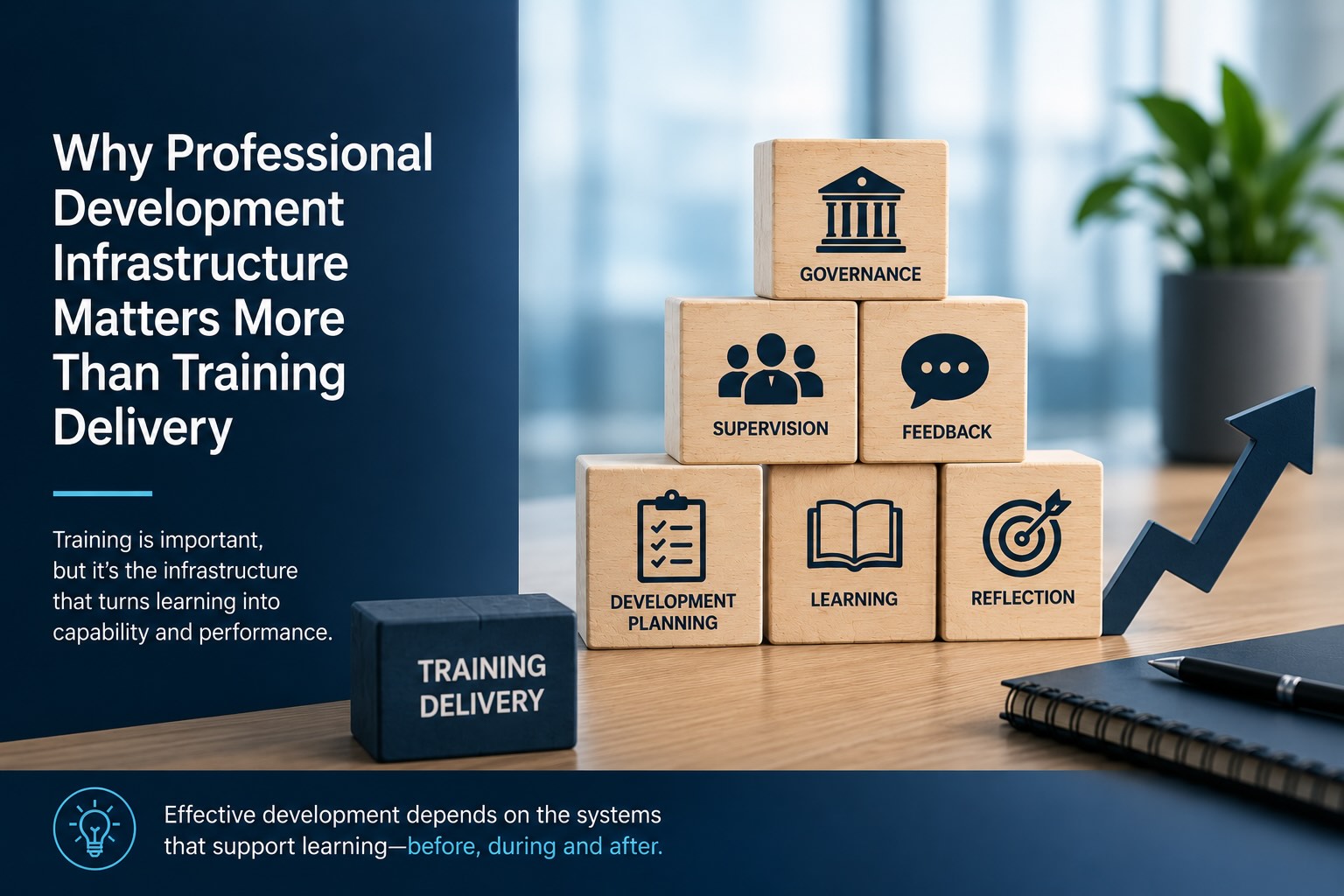
Why Professional Development Infrastructure Matters More Than Training Delivery
Explore Related Topics

Why Competence Is a Leadership Responsibility
Recommended Next Step
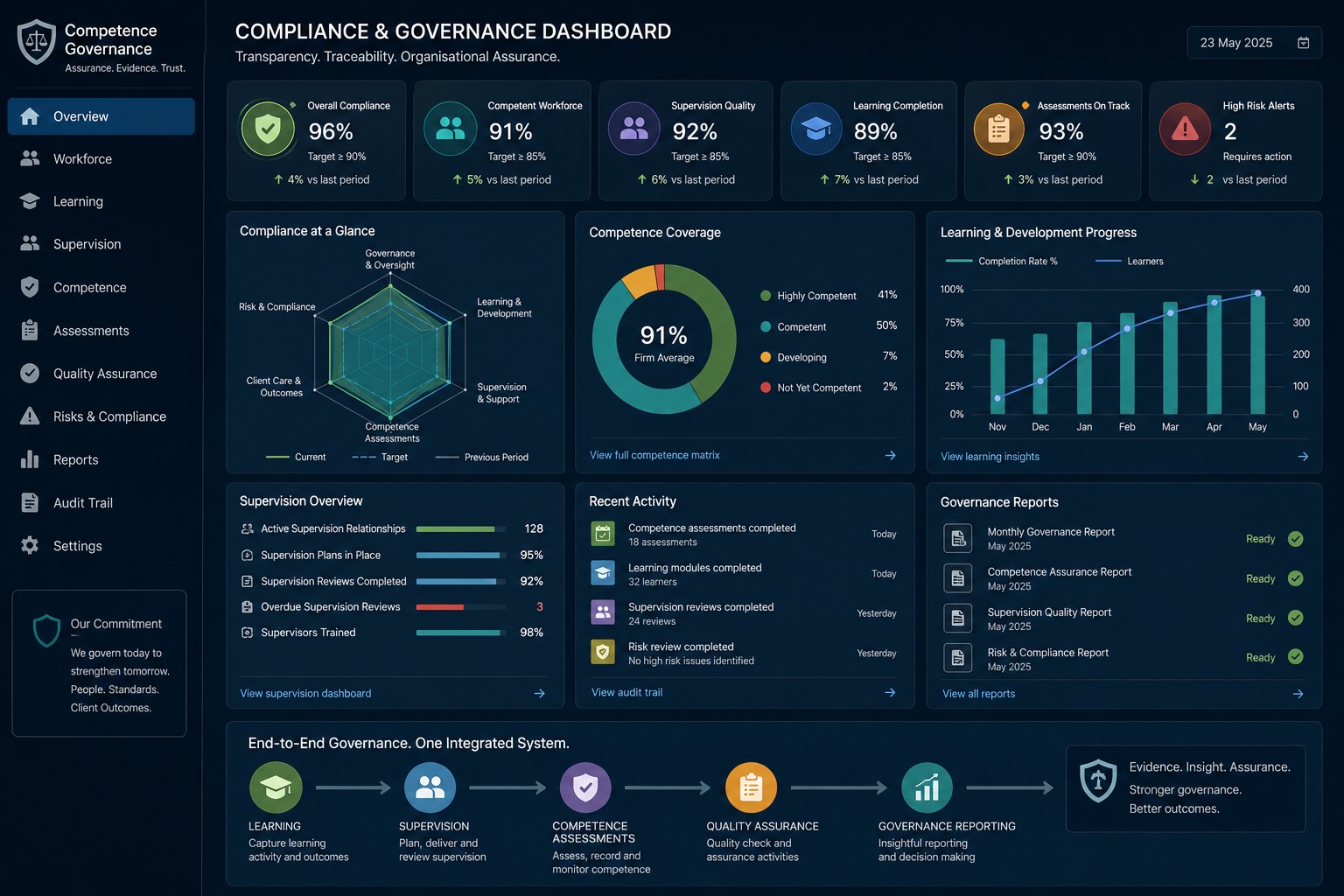
Building an Audit Trail for Continuing Competence
