
Competence Dashboards for Law Firms
Introduction
Most law firms already hold a wealth of information about professional competence. Learning records, supervision meetings, appraisals, quality assurance reviews, client feedback and compliance activities all provide valuable insight into how individuals and teams are developing.
The challenge is not collecting information – it is turning that information into something that supports better leadership decisions. Leaders need to understand whether learning has taken place and if the firm has the capability required to deliver safe, ethical and high-quality legal services.
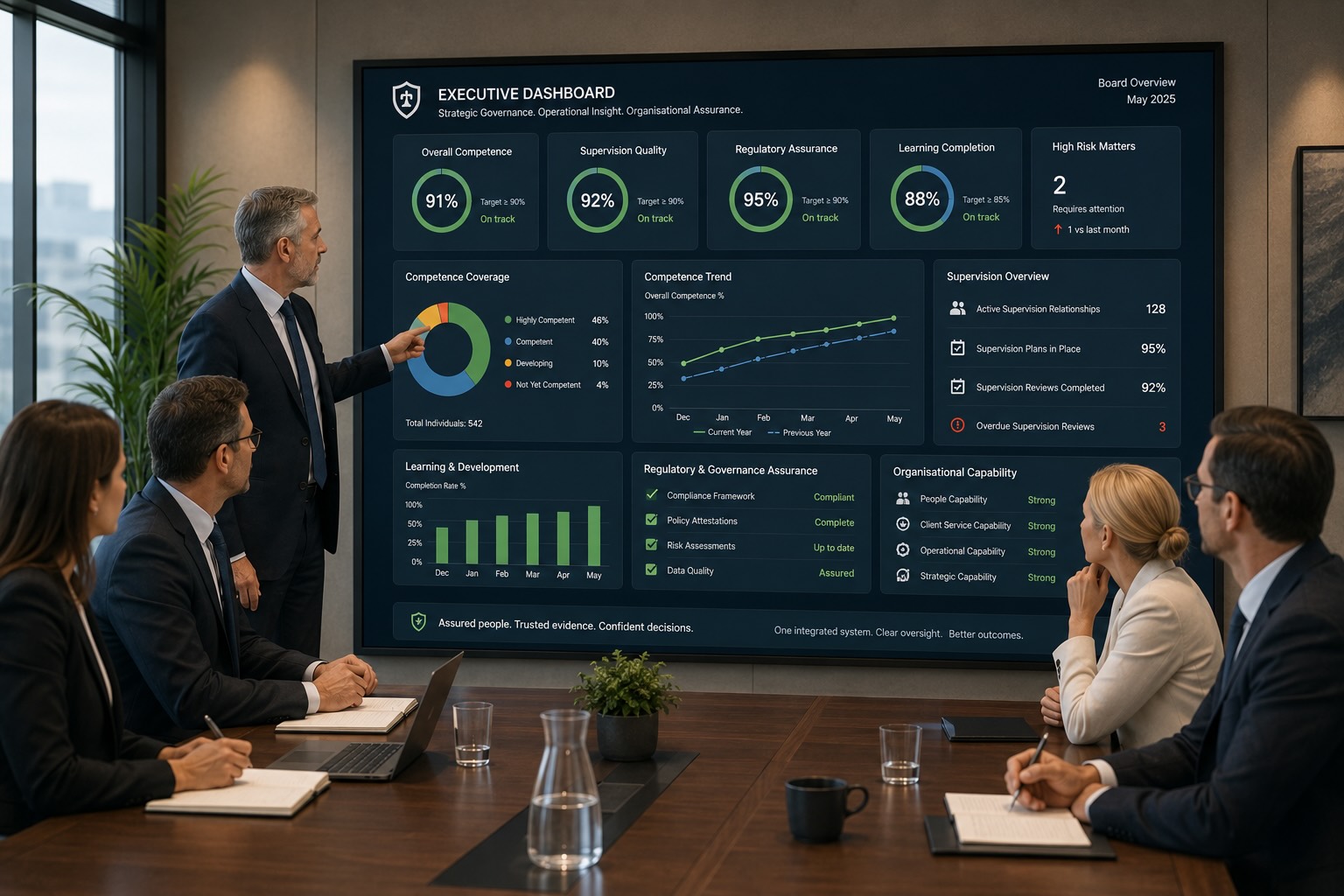
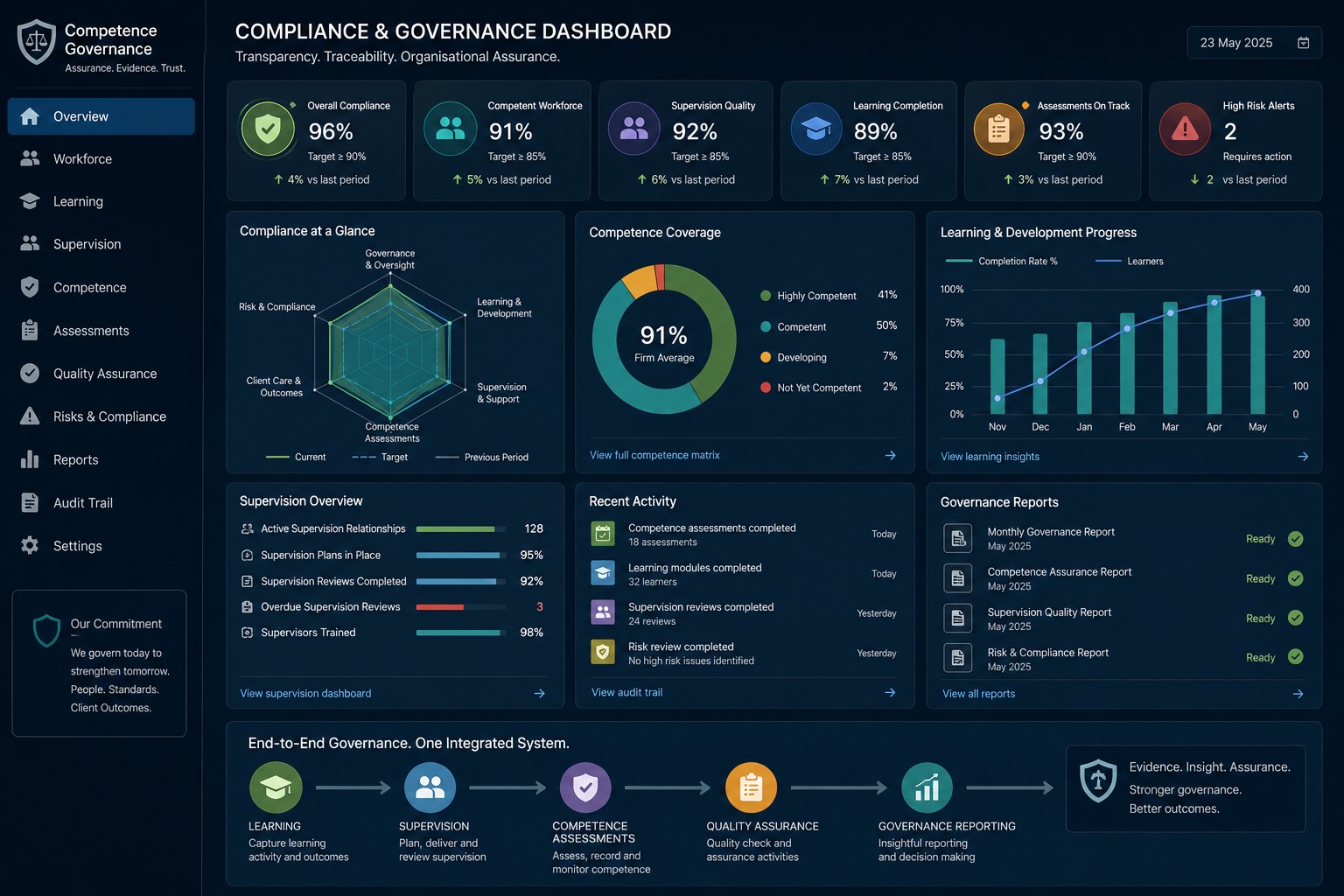
Competence dashboards address this challenge by bringing together information from across the firm into a single management view. Rather than reporting activity alone, they provide evidence of how competence is being developed, supported and governed, helping leadership identify emerging risks, target investment and strengthen professional capability.
Why Dashboards Matter
Law firms routinely use dashboards to monitor financial performance, client relationships and operational efficiency because these measures support better decisions. Professional capability deserves the same level of oversight.
Traditional competence reporting often focuses on activity, such as completed training or mandatory learning. While useful, these measures provide only part of the picture. Leadership also needs to understand where capability risks are emerging, whether supervision is effective and how learning is improving professional performance.
A competence dashboard transforms operational data into meaningful management information, giving firm leadership a clearer understanding of capability across the practice. This supports more informed decisions about development, succession planning, resource allocation and risk management.
What Should a Competence Dashboard Measure?
An effective dashboard does not attempt to measure everything. Instead, it focuses on the information that helps demonstrate capability, identify risk and monitor the effectiveness of competence governance. This will normally include:
- learning and professional development
- supervision and competence reviews
- quality assurance and client outcomes
- capability across teams and practice areas
- governance and regulatory oversight.
Bringing these measures together creates a much richer picture than any individual report. Learning records, supervision discussions, file reviews, client feedback and governance activities all contribute to understanding how competence is developing across the firm. Rather than reviewing each source in isolation, leadership gains an integrated view that supports better decisions about development, succession planning, resource allocation and future investment.
Designing an Effective Dashboard
Well-designed competence dashboards share several characteristics. Their purpose is not to display as much information as possible, but to provide clear, relevant intelligence that supports better decisions.
Support Decision Making
Every measure should provide insight into capability, highlight emerging risks or identify where further support may be needed. If a metric does not influence a management decision, it is unlikely to add value.
Show Trends Over Time
Competence develops over time, making trend analysis more valuable than isolated figures. Monitoring patterns helps leadership assess the impact of development initiatives, identify recurring issues and intervene before concerns become significant.
Highlight Risk
Dashboards should draw attention to areas requiring action rather than treating every measure equally. Clear indicators of emerging risks help leadership prioritise resources and respond promptly.
Keep It Simple
The most effective dashboards present the information that matters most in a clear and consistent format. A concise dashboard is more likely to be used regularly and become an effective tool for competence governance.
Using Dashboards to Drive Improvement
A dashboard should never become a passive reporting tool.
Its real value lies in the conversations it generates.
Leadership meetings might explore questions such as:
- Why are supervision concerns increasing in one department?
- Which capability gaps present the greatest organisational risk?
- Are development investments producing measurable improvements?
- Do certain teams require additional support?
- How should future learning priorities change?
By encouraging evidence-based discussion, dashboards transform competence from an administrative activity into an ongoing management process.
Digital Competence Governance
s competence governance becomes more sophisticated, firms are increasingly bringing together information from learning management, supervision, quality assurance and compliance into integrated digital platforms. This reduces duplication, improves the quality of management information and provides leadership with a more complete view of professional capability.
The greatest benefit of digital integration, however, is not automation but insight. By combining information from multiple sources, firms can identify trends, emerging risks and development needs that may remain hidden when data is held in separate systems. This enables leadership to make earlier, better-informed decisions and supports a more proactive approach to competence governance.
Looking Ahead
As firms strengthen their approach to competence governance, dashboards are likely to become an increasingly important management tool. By bringing together information from learning, supervision, quality assurance and governance, they provide leadership with a clearer understanding of professional capability and the confidence to make better-informed decisions.
Over time, competence dashboards are likely to evolve beyond reporting current performance. Richer data and integrated systems will enable firms to identify emerging risks, anticipate development needs and support workforce planning more effectively. The real value, however, will remain the same: providing timely, meaningful information that helps leadership strengthen professional capability across the firm.
Key Takeaways
- Competence dashboards transform operational data into strategic management information.
- Effective dashboards help demonstrate capability, identify emerging risks and support better decisions
- The most valuable dashboards combine learning, supervision, quality assurance and governance into a single management view..
- Trend analysis and risk identification support earlier intervention.
- Competence intelligence strengthens organisational performance and long-term resilience.
Conclusion
Competence is one of a law firm’s most valuable organisational assets, yet it cannot be managed effectively without meaningful information.
Competence dashboards provide the visibility required to understand capability across the organisation, monitor emerging risks and support evidence-based leadership decisions.
Rather than measuring activity alone, they enable firms to evaluate the effectiveness of learning, supervision and governance as an integrated system.
As competence governance continues to mature, dashboards will become an essential component of organisational leadership, helping firms move beyond compliance towards continual improvement, strategic capability and sustainable professional excellence.
CONTINUE READING
Read Other Articles in This Series
Previous Article
Building an Audit Trail for Continuing Competence
Next Article

LMS vs specialist legal training platforms: What firms need to know
Explore Related Topics

Competence Records: What Good Looks Like
Recommended Next Step
Preparing for Regulatory Scrutiny
